1. Respiratory Depression
According to the NIDA, “Taken as prescribed, opioids can be used to manage pain safely and effectively. However, when abused, even a single large dose can cause severe respiratory depression and death.” All opioids have the potential to cause breathing to slow dangerously (and even stop) when taken in high doses. This includes both illicit and prescription opioids.
2. Tolerance
When someone takes opioids for an extended period of time, they will notice that they are no longer affected the same way by the same dosage of the drug. This is called tolerance and it can cause a person to stray from their prescribed dosage in hopes of feeling the same effects they once did. At this point, the opioid drug is being abused and can lead to many worse consequences.
3. Hypoxia
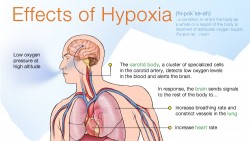
Opiate abuse can lead to Hypoxia.
The respiratory depression that is sometimes caused by large doses of opioids can lead to hypoxia, a condition where a decreased amount of oxygen is able to reach the brain. “Hypoxia can have short- and longterm psychological and neurological effects, including coma and permanent brain damage.” Researchers are currently studying the long-term effects of opioids on the brain to see if hypoxia in opioid abusers can lead to brain damage and other irreversible issues.
4. Seizures
Some opioids, like oxycodone, hydrocodone, and fentanyl, can cause seizures in some patients. According to the NLM, this reaction is “serious,” and an individual should call their doctor immediately if they are experiencing seizures as a result of taking a prescription opioid.
5. Dependence
Although dependence can occur even when someone is taking opioids in the dosage prescribed, it can still be dangerous. A person become dependent on opioids when they cannot feel normal without them. Dependence can be treated with medically-assisted detox, and many individuals who are taking opioids for pain may need detox even if they are not abusing the drug. However, it can be dangerous in its own right and lead to other issues as well as the eventual abuse of the drug.
6. Pain Sensitivity
As stated by University of Utah Health Care, “Long-term use of opioids may actually make pain worse. This is called opioid-induced hyperalgesia.” Over time, taking opioids may make the body more sensitive to pain, especially in the absence of the drug but sometimes even when the drug is present in their system. When this occurs, it can be difficult for the patient to go on being treated in the same fashion, and there is a need for a reevaluation of their care plan.
7. Heart Failure
As CESAR states, heart failure can occur with the use of oxycodone as well as with some other opioid-based drugs. Long-term opioid use can cause damage to the heart because of the general sedation patients can experience (UUHC). While this is problematic on its own, high doses of opioids can lead to chest pains, fainting, shortness of breath, and eventually, even heart failure.
8. Addiction
According to the NIDA Teen, “Addiction is when a person seeks out and uses the drug over and over even though they know it is damaging their health and their life.” This can occur in an individual who begins abusing opioids because they are habit-forming and can lead to a person not being able to control their compulsive need for the drug. Opioid addicts will need to attend treatment in order to recover, and addiction can lead to many problems in a person’s life including financial, personal, family, professional, and legal issues.
9. Withdrawal
When a person becomes dependent on opioids and suddenly stops taking them, they will experience withdrawal. While opioid withdrawal reactions are “not life-threatening,” they can be extremely uncomfortable and painful, often leading to the individual relapsing and abusing more of the drug (NLM).
10. Initial Prescription Drug Abuse Leads to Illicit Drug Abuse
When a person starts abusing opioids, they will continue to abuse more and more as they become addicted. According to the NIDA, “Research now suggests that abuse of [prescription opioid drugs] may actually open the door to heroin abuse.” This is especially common in teens and other young drug abusers.
11. Depression
In many cases, long-term opioid abuse can lead to depression or exacerbate a condition of depression in the individual. A person will often become very apathetic toward the other aspects of their life after they have been abusing opioids for a while. And during opioid withdrawal, depression can be a major factor and cause an individual to want to relapse.
12. Diseases
The CDC states that those on methadone treatment have a reduced risk of “acquiring or transmitting diseases” compared to those who abuse opioids. Some of these diseases are HIV, hepatitis B and C, bacterial infections, soft tissue infections, STDs, etc. Someone who abuses opioids has a higher risk of transmitting or acquiring these diseases than someone who doesn’t.
13. Sleepiness
While this is not altogether one of the most dangerous side effects of opioid use, patients are warned to be careful when they are on the drug. They may become very sleepy which can be dangerous if they are driving or doing something else that requires alertness and attention. Also, if an individual is abusing opioids, they may be in danger if they are not somewhere they know well or with people whom they can trust.
14. Gastrointestinal Problems
Constipation and nausea are two of the most common side effects of opioid use and abuse. Gastrointestinal problems can form as a result, often if the individual has been taking the drug for a prolonged amount of time.
15. Pregnancy Problems
Babies who are born to individuals who have been using or abusing opioids during pregnancy can experience neonatal abstinence syndrome which is similar to adult opioid withdrawal only more dangerous. According to the NLM, it is characterized by excessive crying, seizures, poor feeding leading to slow weight gain, sleep problems, sweating, and vomiting. Babies with this syndrome need extra care.
 10 Amazingly Effective Eastern Medicine Treatments for Opiate Addiction -
According to the National Library of Medicine, scientists are currently studying eastern treatments for opiate addiction. The philosophy of many of the eastern treatment programs is not to treat just the addiction but the whole body. Many of these treatments are used in combination with each other. They believe in treating the mind, body, and ...
10 Amazingly Effective Eastern Medicine Treatments for Opiate Addiction -
According to the National Library of Medicine, scientists are currently studying eastern treatments for opiate addiction. The philosophy of many of the eastern treatment programs is not to treat just the addiction but the whole body. Many of these treatments are used in combination with each other. They believe in treating the mind, body, and ...  Ways to Get Relief from the Symptoms of Opium Withdrawal -
Opium is a naturally occurring highly addictive drug that claims 5% of the United States as its slaves. Slaves to opium addiction find that the cycle they have started seems nearly impossible to break due to tolerance build up and immediate withdrawal symptoms as soon as the effects of the “high” recede into the shadows. With ...
Ways to Get Relief from the Symptoms of Opium Withdrawal -
Opium is a naturally occurring highly addictive drug that claims 5% of the United States as its slaves. Slaves to opium addiction find that the cycle they have started seems nearly impossible to break due to tolerance build up and immediate withdrawal symptoms as soon as the effects of the “high” recede into the shadows. With ...  Finding the Best Treatment for Opiate Addiction -
If you have decided that you need to attend opiate addiction treatment in order to recover from your dangerous opioid use, you are already on the right path. But finding treatment for your opiate addiction––and the best treatment for your needs – can be challenging. It is important to learn what treatment entails and what are the ...
Finding the Best Treatment for Opiate Addiction -
If you have decided that you need to attend opiate addiction treatment in order to recover from your dangerous opioid use, you are already on the right path. But finding treatment for your opiate addiction––and the best treatment for your needs – can be challenging. It is important to learn what treatment entails and what are the ...  The Dangers of Using Opium Medicine -
Opiate-based painkillers are often prescribed for patients suffering with severe or chronic pain. Doctors are likely to prescribe these painkillers for cancer patients, especially those in the later stages of the disease. While opium medicine is effective for pain relief, you should consider the dangers before taking it. Common Side Effects According to the Norris ...
The Dangers of Using Opium Medicine -
Opiate-based painkillers are often prescribed for patients suffering with severe or chronic pain. Doctors are likely to prescribe these painkillers for cancer patients, especially those in the later stages of the disease. While opium medicine is effective for pain relief, you should consider the dangers before taking it. Common Side Effects According to the Norris ...  Opium Long Term Effects on the Body -
Opium exists as a natural analgesic agent in the form of the opium poppy seed plant. Consequently, a wide range of prescription (and illegal) drugs has been formulated from this natural material. Whether taken for medicinal or recreational purposes, opium-derived drugs pose a high risk for abuse and addiction. People who’ve taken opium-type substances, or ...
Opium Long Term Effects on the Body -
Opium exists as a natural analgesic agent in the form of the opium poppy seed plant. Consequently, a wide range of prescription (and illegal) drugs has been formulated from this natural material. Whether taken for medicinal or recreational purposes, opium-derived drugs pose a high risk for abuse and addiction. People who’ve taken opium-type substances, or ...