Many individuals feel that they can handle the effects of drug abuse on their own when they decide to quit. Especially because opioids do not normally cause a deadly withdrawal syndrome and those who have been abusing these drugs are often nervous about legal consequences, many choose to handle the effects of opioid drug abuse and addiction without professional treatment. However, opioid overdose can be extremely dangerous, and it is much safer for individuals who have overdosed from these drugs to seek medical help immediately in an inpatient treatment center.
What Occurs When a Person Overdoses on Opioids?
According to the National Library of Medicine, when a person overdoses on opioids, they will first experience “extreme sleepiness or loss of alertness,” which becomes much more intense in an overdose situation than in the instance of normal intoxication. The individual’s breathing will also begin to slow, often to the point where they are not receiving enough oxygen. The person may even stop breathing altogether. This can be extremely dangerous and may lead to permanent brain damage, coma, or even death.
Other signs of an opioid overdose are:
- Dizziness
- Fainting
- Limp or weak muscles
- Clammy skin
- Blue skin, fingernails, lips, or mouth
- Loss of consciousness
- Slowed heartbeat
- Small pupils (pinpoint pupils)
When a person overdoses on opioids, time is of the essence and the individual must receive treatment right away. But what are the possible options for opioid overdose treatment option?
What are the Options for Opioid Overdose Treatment?
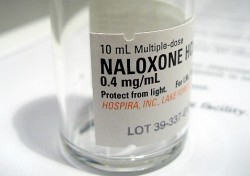
Opioid overdose treatment often involves a Naloxone injection.
A person must be treated immediately for an opioid overdose. The individual can receive two types of treatments:
- Going to an inpatient center/hospital
- Getting a naloxone injection at home
Inpatient centers are hospitals or other facilities that provide medical care, 24-hour surveillance from healthcare professionals, and accommodations for the patient to stay overnight. These facilities provide everything an individual who has gone through opioid overdose would need.
Naloxone is a drug that can be given to a patient at an inpatient center or it can be administered by someone at home. According to the Massachusetts Department of Public Health, “It is safe, easy to administer, and has no potential for abuse.” Naloxone is an opioid antagonist that blocks the effects of opioids in a person’s system, causing them to be able to breathe again safely. The medication is extremely necessary to patients in an overdose situation, as it can often bring someone back from the brink of death.
A person should not go to a small clinic or outpatient center for opioid overdose care because these facilities often do not have the resources to help them. Instead, inpatient care is the best possible opioid overdose treatment. If you or someone you know does have a naloxone pre-filled auto-injection device, this treatment can––and should––still be used as quickly as possible, but the individual should still be taken to an inpatient care center regardless. Taking an individual to the hospital or another type of inpatient facility is the safest way for them to recover from opioid overdose, even if other treatments are available.
Why Should I Choose Inpatient Care for Opioid Overdose Treatment?
Inpatient care is the best option for the treatment of opioid overdose because the syndrome itself is extremely dangerous. A person should not try to weather an opioid overdose because it could become worse extremely quickly, and many people do not have naloxone auto-injection devices at home. Even when someone does have an auto-injection device, the individual could still experience other dangerous symptoms after receiving the medication. According to the NLM, “Your symptoms may return within a few minutes after you receive a naloxone injection,” which is why anyone who has overdosed on opioids should then receive immediate medical care at an inpatient facility.
Once the individual is hospitalized, they will receive a number of treatments, including breathing support if they cannot breathe and a naloxone injection if one is necessary. The person’s blood pressure, pulse, temperature, breathing rate, and a number of other vital signs will be taken so the extent of the damage can be determined and the healthcare providers at the inpatient center can know how best to help the individual. These treatments and tests are necessary to protect the person and to ensure that the effects of the drugs themselves have subsided.
Inpatient care is also necessary for people who have overdosed on opioids because they often require more treatment beyond stabilization and acute medical care. Many individuals who overdose on opioids do so because they are addicted to these drugs. Addiction is a very serious condition and can affect an individual’s entire life; it is unlikely that the person will be able to stop abusing opioids unless they receive professional opioid addiction treatment. Many hospitals are able to help patients transition into longer-term treatment for their addictions, and other opioid inpatient care programs can treat both overdose effects and the addiction itself.
In addition, some individuals abuse opioids in high doses because they are trying to commit suicide. Anyone who has overdosed on opioids and also shows signs of suffering from depression or suicidal thoughts should receive inpatient care to avoid a similar situation from occurring again. Those individuals who suffer from both a mental disorder and opioid addiction, a common problem, are in need of inpatient care as well. A study from Pychiatr Q published by the National Center for Biotechnology Information states that individuals with high psychiatric severity––or co-occurring mental disorders and/or addictions––are known to fare better in inpatient care than in outpatient care.
The initial needs of someone who has overdosed on opioids require them to be taken to an inpatient care facility where they can be treated properly and receive medical help. But even after an individual has been stabilized, they will likely still need inpatient care for other reasons. Therefore, it is safest to choose inpatient care for opioid overdose treatment.
Do You Know Someone in Danger of Opioid Overdose?
Call 877-743-0081 (Who Answers?) to talk to someone about the inpatient care facilities and hospitals in your area as well as how best to help your loved one who may be in danger of opioid overdose. However, if you are in an emergency situation, always call 911 first.
 How Dangerous is Opium Abuse? -
According to the Drug Enforcement Administration, “Opium is a highly addictive non-synthetic narcotic that is extracted from the poppy plant, Papaver somniferum.” The drug causes similar effects to the prescription opioids it can be used to create, but it is not currently used as a treatment for any medical condition. Some people abuse opium in ...
How Dangerous is Opium Abuse? -
According to the Drug Enforcement Administration, “Opium is a highly addictive non-synthetic narcotic that is extracted from the poppy plant, Papaver somniferum.” The drug causes similar effects to the prescription opioids it can be used to create, but it is not currently used as a treatment for any medical condition. Some people abuse opium in ...  3 Signs That You May Need Methadone Treatment Help -
Once opiate addiction sets in, it can be nearly impossible to stop using on your own. Methadone treatment provides the support necessary to become and remain sober.
3 Signs That You May Need Methadone Treatment Help -
Once opiate addiction sets in, it can be nearly impossible to stop using on your own. Methadone treatment provides the support necessary to become and remain sober.  Ways that you Sabotage your Recovery from Heroin Addiction -
According to the National Institute on Drug Abuse, heroin is one of the most difficult addictions to recover from. It also has an incredibly high relapse rate. Most people who try it on their own sabotage their own efforts to recover from heroin addiction. Listening to the Inner Addict One of the worst people to ...
Ways that you Sabotage your Recovery from Heroin Addiction -
According to the National Institute on Drug Abuse, heroin is one of the most difficult addictions to recover from. It also has an incredibly high relapse rate. Most people who try it on their own sabotage their own efforts to recover from heroin addiction. Listening to the Inner Addict One of the worst people to ...  What are Opiate Derivatives? -
Opiate drugs remain the most effective treatment for relieving pain symptoms of most any kind. Conditions involving back pain, post-surgery pain or just a plain old headache can all be treated using opiate drugs. Opiate derivatives span across multiple groupings within the opiate drug class, with opiate derivatives making up the majority of opiate drugs ...
What are Opiate Derivatives? -
Opiate drugs remain the most effective treatment for relieving pain symptoms of most any kind. Conditions involving back pain, post-surgery pain or just a plain old headache can all be treated using opiate drugs. Opiate derivatives span across multiple groupings within the opiate drug class, with opiate derivatives making up the majority of opiate drugs ...  The Dangers of OxyContin and Morphine -
Both OxyContin and morphine are in a class of drugs called narcotic pain relievers or opioids. Despite their medical usefulness, some major problems occur when you begin to abuse them. Many people who take these drugs wind up experiencing at least one of the dangers posed by OxyContin and morphine. Addiction and Abuse Both morphine ...
The Dangers of OxyContin and Morphine -
Both OxyContin and morphine are in a class of drugs called narcotic pain relievers or opioids. Despite their medical usefulness, some major problems occur when you begin to abuse them. Many people who take these drugs wind up experiencing at least one of the dangers posed by OxyContin and morphine. Addiction and Abuse Both morphine ...