For anyone that has ever dealt with an opium addiction, or witnessed it in a loved one, it is a scary thing. The damages wrought on the body and mind are inarguable and devastating. Perhaps even more frightening is the little considered fact that opium addictions help fund criminal and terrorist organizations in a big way. In order to understand how an opium addiction may fund terrorism, and what to do about it, there are a few things to know.
What is opium addiction?
The first thing to know is what opium addiction is. In general, addiction is defined as a physical or mental desire for something that interferes with a person’s day-to-day life. Basically, an addict spends every moment seeking their “high”. Even while on a “high”, they are thinking about the next one. Opium addiction is no different. Some of the signs of opium abuse and addiction include:
- depression,
- sedation,
- headache,
- nausea,
- rapid physical deterioration,
- mood swings,
- loss of appetite, and
- insomnia.
This is not a complete list, either. There is also the very real possibility of overdose, and severe damage to heart, brain, and lungs that can very easily result in death.
Where does opium come from?
Opium is made from the processed flower parts of the opium poppy plant. According to the BBC, 92% of the world’s opium is produced in Afghanistan, and generates an estimated 65 billion dollars in revenue. This constitutes a large percentage of their national economy. Opium poppy growth and processing are legal in many places around the world, because there are a number of legitimate uses for opium. Namely medications. These are:
- morphine,
- codeine,
- OxyContin,
- hydrocodone,
- Vicodin,
- Lorcet, and
- Demerol.
However, it is not the growth of opium poppies, or the legal sale of opium based medications that funds terrorism.
How opium funds terrorism
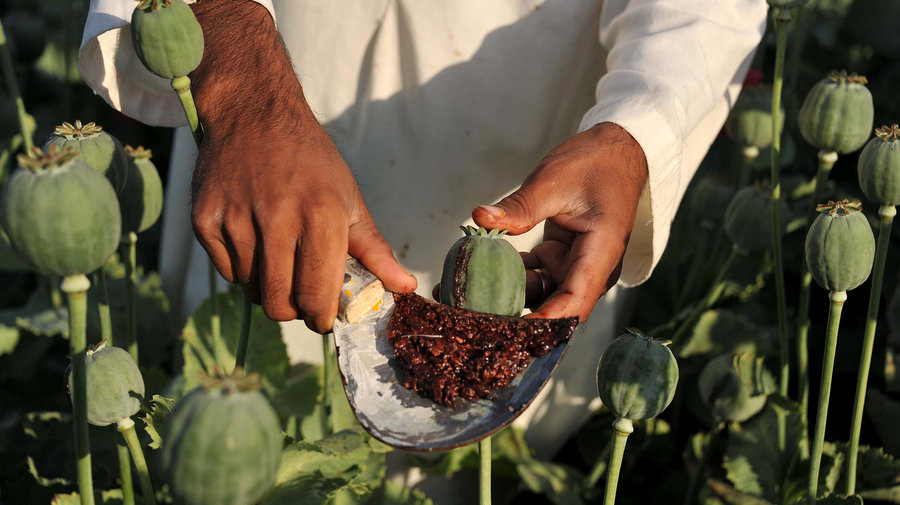
Opium production is legal in most places around the world.
What does fund terrorism, is the trafficking, processing, and illegal sale of opium and its most common derivative, heroin. A large portion of the opium produced in Afghanistan is sold in markets along the Pakistani border. These markets exist in a duty free zone that is essentially lawless, and is a known safe-haven for Al-Qaida and the Taliban. In these markets, all manner of illegal transactions are administered. According to the Counter Terrorism Center at the United States Military Academy at West Point, the terrorist organizations that operate there make up to a 20% profit from taxation, transport, and “security” (protection money). From here, the opium is shipped through a number of areas that support terrorist activities, and state sponsors of terrorism. Some of these include:
- tribal Pakistan,
- parts of southern Russia,
- Iran,
- Portions of Iraq and Turkey controlled by Islamic State, and
- the free trade markets of Dubai.
In some cases there is even evidence of illicit drugs such as opium being used as the currency to fund terrorist activities. One such example of this, according to the United Nations Office on Drugs and Crime, is the Madrid train bombings of 2004. Even more frightening, is that recent information suggests that some terrorist organizations have begun to branch out into the growth and production of opium, in order to increase their profit share.
What can you do about it?
If you are addicted to opium, the best thing you can do to stop the funding of terrorism is to stop using opium. This is easier said than done. Opium addiction is a complicated and difficult disease to overcome. However, there are a number of resources available to help you. From rehab centers and methadone clinics, to counseling and 12 step programs. Each person that stops using opium potentially cuts the ability of terrorist organizations to further their aims.
 The Dangers of Abusing Heroin & Prescription Pain Pills and the Need for Opiate Addiction Treatment -
Both heroin and prescription pain pills belong to the same class of drugs known as opiates. While heroin’s designation as a Schedule I class controlled substance makes for one of the most addictive substances around, prescription pain pills fall under the Schedule II class designation, which can be just as addictive depending on the drug ...
The Dangers of Abusing Heroin & Prescription Pain Pills and the Need for Opiate Addiction Treatment -
Both heroin and prescription pain pills belong to the same class of drugs known as opiates. While heroin’s designation as a Schedule I class controlled substance makes for one of the most addictive substances around, prescription pain pills fall under the Schedule II class designation, which can be just as addictive depending on the drug ...  Will Being Around Narcotic Abuse Cause Me to Become a User Too? -
All people have a will of their own and are able to make decisions that lead them to certain points in their lives. However, being around people constantly who abuse narcotics can possibly lead you to do so as well. Risk Factors for Addiction and Abuse According to the National Institute on Drug Abuse, “Risk ...
Will Being Around Narcotic Abuse Cause Me to Become a User Too? -
All people have a will of their own and are able to make decisions that lead them to certain points in their lives. However, being around people constantly who abuse narcotics can possibly lead you to do so as well. Risk Factors for Addiction and Abuse According to the National Institute on Drug Abuse, “Risk ...  Am I Addicted to Opiates or Am I Struggling with Physical Dependence? -
Whether you're battling physical dependence or a full-blown addiction to opiates, seeking professional treatment should be considered.
Am I Addicted to Opiates or Am I Struggling with Physical Dependence? -
Whether you're battling physical dependence or a full-blown addiction to opiates, seeking professional treatment should be considered.  Dangers of Smoking Opiates -
Most people that use opiates do so because of the pain relieving effect it has, and the euphoric feelings they experience. Like many other drugs, opiates can cause physical and psychological problems for the user when the drug is abused. Smoking opiates can last several hours, and can be very addictive. Users feel the effects ...
Dangers of Smoking Opiates -
Most people that use opiates do so because of the pain relieving effect it has, and the euphoric feelings they experience. Like many other drugs, opiates can cause physical and psychological problems for the user when the drug is abused. Smoking opiates can last several hours, and can be very addictive. Users feel the effects ...  What’s Involved in Holistic Heroin Detox Treatment? -
Holistic heroin detox is a natural, effective way to overcome addiction for those opposed to using replacement medications.
What’s Involved in Holistic Heroin Detox Treatment? -
Holistic heroin detox is a natural, effective way to overcome addiction for those opposed to using replacement medications.