Most all opiates are modeled after opium, nature’s natural pain-relieving agent. According to the Institute for Substance Abuse Treatment Evaluation, some opiates come directly from the opium plant while others exist as synthetically-made agents that produce similar effects.
While the question “what drugs are opiates” may seem to be fairly straight-forward, this drug class includes a wide range a drugs, both legal and illegal. The different types of drugs in this class can also be used for various treatment purposes.
Analgesics
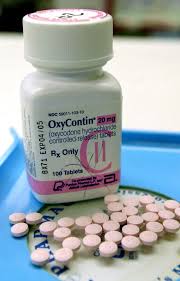
Oxycontin, a common opiate, is a prescription pain medication.
Analgesics are typically the first class of drugs to come to mind when someone asks “what drugs are opiates.” This category of opiates encompasses the broad spectrum of prescription pain medications, some of which include:
- Lortab
- OxyContin
- Percocet
- Percodan
- Demerol
- Dilaudid
Technically speaking, heroin and opium also belong in this category though these drugs have no medicinal value as far as analgesics go.
According to the National Institute on Drug Abuse, analgesics work by blocking pain sensations from reaching the brain’s sensory regions. They do this by activating certain key brain cell sites, which release neurotransmitter chemicals, such as serotonin, dopamine and norepinephrine.
Analgesics also have a chemical make-up that’s similar to the brain’s own neurotransmitter chemicals. As a result, these drugs integrate easily within the brain’s chemical system.
This similarity also accounts for why these drugs carry such a high risk for abuse and addiction. In terms of what drugs are opiates, this category sits at the top of the list.
Opiate Addiction Treatment Medications
Chronic opiate addictions cause widespread damage to the brain’s chemical system. Opiate addiction treatment medications support damaged brain cell processes and help restore a normal chemical balance.
When asking “what drugs are opiates,” many people don’t realize that a number of addiction treatment medications actually contain opiate compounds. In effect, opiate-based treatments enable addicts to wean off the harmful effects of addictive opiates.
Full Agonists
Agonist-type addiction treatments work in much the same way as analgesics, only these drugs deliver controlled effects at a slow-release rate. The two most commonly used full agonist agents include methadone and LAMM. When considering opiate addiction treatment medications, knowing what drugs are opiates can help a person make an informed decision as these drugs do carry a mild addiction risk.
Partial Agonists
Partial agonist-type addiction treatments also produce opiate effects in the brain at a slow-release rate. Partial agonists differ from full agonists in that partial agonists carry a “ceiling effect” once dosage amounts reach a certain level. After this point, the drug’s opiate effect levels off.
This ceiling effect makes for a less addictive treatment drug than full agonists like methadone and LAMM. When it comes to addiction treatment, knowing what drugs are opiates can come in handy, especially in cases where there’s a high risk of becoming addicted to the treatment drug.
Partial agonists commonly used include:
- Buspirone
- Aripiprazole
- Buprenorphine
- Norclozapine
Antagonists
Antagonist-type addiction treatments serve a different purpose in recovery, as these drugs work to block the effects of addictive opiates in the event a person relapses. Instead of activating brain cell sites, antagonists occupy site receptors and keep agonist-type opiates from activating chemical secretions.
Antagonist drugs used in opiate addiction treatment include:
- Nalorphine
- Naltrexone
- Levallorphan
- Naloxone
Ultimately, what drugs are opiates has as much to do with the types of cell sites a drug interacts with as it does the effects it produces.
 15 of the Best Reasons to Seek Treatment for Heroin Addiction -
According to the Centers for Disease Control, deaths due to heroin are now reaching epidemic proportions. Fortunately, addiction to this deadly drug is highly treatable with medication, counseling, and therapy. There are many very good reasons to seek treatment for heroin addiction. 1. It is Highly Addictive Heroin is one of the most addictive substances ...
15 of the Best Reasons to Seek Treatment for Heroin Addiction -
According to the Centers for Disease Control, deaths due to heroin are now reaching epidemic proportions. Fortunately, addiction to this deadly drug is highly treatable with medication, counseling, and therapy. There are many very good reasons to seek treatment for heroin addiction. 1. It is Highly Addictive Heroin is one of the most addictive substances ...  Will Opium Addicts Relapse After Treatment? -
According to Harvard Medical School, “Addiction is a chronic disease with no lasting inexpensive cure. Recovery, when it occurs, is precarious, and relapse is a constant danger.” This does not necessarily mean that an individual will definitely relapse after opium addiction treatment, but they will likely experience issues that will trigger them to relapse or ...
Will Opium Addicts Relapse After Treatment? -
According to Harvard Medical School, “Addiction is a chronic disease with no lasting inexpensive cure. Recovery, when it occurs, is precarious, and relapse is a constant danger.” This does not necessarily mean that an individual will definitely relapse after opium addiction treatment, but they will likely experience issues that will trigger them to relapse or ...  5 Things that Contribute to Opioid Overdose -
According to the United States White House, more Americans are dying from prescription painkiller overdose than from heroin or many other illegal drugs. With this rising tide of prescription painkiller and opiate overdoses, you have to wonder what contributes to this epidemic. Several agencies have identified factors that might help predict those who are at ...
5 Things that Contribute to Opioid Overdose -
According to the United States White House, more Americans are dying from prescription painkiller overdose than from heroin or many other illegal drugs. With this rising tide of prescription painkiller and opiate overdoses, you have to wonder what contributes to this epidemic. Several agencies have identified factors that might help predict those who are at ...  Are All Opium Based Drugs Addictive? -
Opium based drugs, such as opioid type medications that doctors prescribe to help alleviate painful ailments can be addicting. Opium is known for its natural pain relieving effects, but it is also very addictive. Heroin is another highly addictive drug that contains opium, however, it has no medicinal purpose in the United States, and it ...
Are All Opium Based Drugs Addictive? -
Opium based drugs, such as opioid type medications that doctors prescribe to help alleviate painful ailments can be addicting. Opium is known for its natural pain relieving effects, but it is also very addictive. Heroin is another highly addictive drug that contains opium, however, it has no medicinal purpose in the United States, and it ...  Opiate Drugs – A Comprehensive List of Opiates -
By now, most everyone’s aware of how addictive opiate drugs can be. Unfortunately, many may not realize how many varieties of drugs fall under the opiate drug classification. Best known for their ability to relieve pain symptoms, most opiate drugs work by depressing or slowing down brain and central nervous system functions, according to the ...
Opiate Drugs – A Comprehensive List of Opiates -
By now, most everyone’s aware of how addictive opiate drugs can be. Unfortunately, many may not realize how many varieties of drugs fall under the opiate drug classification. Best known for their ability to relieve pain symptoms, most opiate drugs work by depressing or slowing down brain and central nervous system functions, according to the ...