According to the Food and Drug Administration, Suboxone is a long acting drug that doctors can use in the maintenance phase of opioid detoxification. As with any medication, reactions vary depending on the health, addiction, and amount of the opioid they took. Many people ask how long does Suboxone block opioids. The answer to that depends on a variety of factors. To figure out how long it will block opioids and if it is right for you there are few things to consider first. These things are what Suboxone is, what is in it, how it works, its side effects, and why people take it.
What is Suboxone
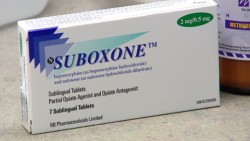
Suboxone is a drug that treats opioid addiction.
According to the National Institute on drug abuse Suboxone is not an opioid substitute or a substitute for heroin. In its gradual onset, it produces more stable levels of the opioid in the brain. This stops the user’s cravings for opioids. In order to continue stopping the cravings and preventing withdrawal the doctor and user must make sure that this level is maintained. It also suppresses the euphoric effect when someone adds another opioid such as heroin. It does not allow heroin to produce the euphoric high the abuser is used to. Suboxone does this using two primary chemicals.
What is in Suboxone
Many users want to know what is in Suboxone. The two active ingredients are Buprenorphine and Naloxone. It is normally one part Naloxone to every four parts Buprenophine. To understand how Suboxone works it is important to understand how each of these parts works. Buprenorphine is a partial opiate agonist. This means that it excites the opioid receptors in the brain. Naloxone is a chemical blocker. It stops and reverses the effects of other narcotics. This drug is commonly given to people who are in active overdose or who would otherwise die from their drug use. Naloxone works to knock the narcotics off of the opiate receptors thereby stopping the overdose and waking up the user. It works particularly well in cases of respiratory distress. The issue of taking Naloxone alone is that it kicks off the withdrawal symptoms immediately, sending the user into full withdrawal. When used with Buprenorphine it can treat the symptoms of withdrawal and stop the incidents of relapse.
How does Suboxone work
Suboxone works in two ways. The first is to stop the drug cravings by binding to the opiate receptors. These receptors normally produce the euphoric high that someone gets while taking prescription pain killers or heroin. The Buprenorphine does this because it is a partial opiate receptor agonist. Since Buprenorphine is stronger agonist than heroin and other opiates it keeps the receptors occupied despite the presence of another opiate. Naloxone knocks full opiate agonists off the receptors allowing Buprenorphine to take its place. The two medications work together by first stopping the opiate reaction or high and then replacing the opiates with a partial opiate to avoid withdrawal symptoms.
How long will Suboxone block opioids for
In order to understand how long Suboxone blocks opioids for it is important to understand what is meant by a half life. A half life is how long it takes for a substance to be reduced by half. In the case of medications, the half life is how long it takes for half of the medication to leave the body.
According to Reckitt Benckiser, the manufacturer of Suboxone, it has a total half life of 24 to 42 hours. This is how long it takes the Buprenorphine to exit the system. Naloxone on the other hand has a half life of 2 to 12 hours. This means that it takes the body between 48 to 84 hours to remove it from its system. Complete blocking of opiates continues until approximately 24 hours after a person takes Suboxone. Then the opioids are partially blocked for another 64 hours. This time frame depends on the dosage of Suboxone and the length of time taking it.
The side effects of Suboxone
Like all medications Suboxone has several side effects. The prevalence and severity of these effects depends on the amount a person is taking. People taking larger amounts have an increased chance of a negative reaction. Some of the common side effects are:
- dizziness or lightheadedness,
- feeling overly warm or flushed,
- sweating,
- headache,
- fever,
- cough,
- painful urination, and
- back or side pain,
Some of the less common side effects of Suboxone are:
- bloating or swelling,
- unusual weight changes such as rapid weight gain or loss, and
- tingling of the hands or feet.
For the most part these side effects are not severe enough for people to stop taking Suboxone. Most people report that they dissipate quickly.
Why take Suboxone
There are many reasons why people choose to take Suboxone over other methods of detoxification. Suboxone blocks opiates and withdrawal symptoms. With its long half life, it keeps the cravings at bay for longer periods of time than methadone and other methods. The answer to the question how long does Suboxone block opioids is although each person is different, Suboxone continues to block opiates for approximately two days after taking it. It completely blocks opioids for the first 12 to 24 hours after taking it. It is extremely important to speak with a doctor before taking opioids including prescription medication and heroin while taking Suboxone. Using while taking Suboxone can result in overdose or complete withdrawal.
 Opium Addiction Treatment -
Opium is a substance that is derived from the poppy plant and which causes a euphoric state when smoked or eaten. The drug is considered a narcotic and was widely abused throughout Chinese culture for hundreds of years before the dangers of addiction were first noticed. Opium addiction has led to life-threatening consequences, dangerous illness and a world ...
Opium Addiction Treatment -
Opium is a substance that is derived from the poppy plant and which causes a euphoric state when smoked or eaten. The drug is considered a narcotic and was widely abused throughout Chinese culture for hundreds of years before the dangers of addiction were first noticed. Opium addiction has led to life-threatening consequences, dangerous illness and a world ...  When are Opium Abusers Most Likely to Relapse? -
If you have recently begun your journey to recovery from opium abuse, you have made an important decision that will change your life and allow you to become the person you want to be. It is also necessary that you prepare for the possible occurrence of relapse – as this is a likely event in the recovery ...
When are Opium Abusers Most Likely to Relapse? -
If you have recently begun your journey to recovery from opium abuse, you have made an important decision that will change your life and allow you to become the person you want to be. It is also necessary that you prepare for the possible occurrence of relapse – as this is a likely event in the recovery ...  10 Opium Drug Effects -
While opium may seldom be used in its purest form, many prescription medications either contain opium or are synthetically made to produce opium drug effects. Likewise, heroin, one of the most popular opium-derived drugs on the market, produces some of the strongest opium drug effects of all. Opium contains certain alkaloids known for their ability ...
10 Opium Drug Effects -
While opium may seldom be used in its purest form, many prescription medications either contain opium or are synthetically made to produce opium drug effects. Likewise, heroin, one of the most popular opium-derived drugs on the market, produces some of the strongest opium drug effects of all. Opium contains certain alkaloids known for their ability ...  How Does Opium Addiction Treatment Help Me Stay Drug-Free? -
While most any form of addiction can be difficult to overcome, opiate addictions in particular exert a tremendous hold over a person’s will, thoughts and behaviors. People entering recovering often struggle with the aftereffects of opiates long after they stop using drugs. Without the needed supports in place, it can be especially difficult to stay ...
How Does Opium Addiction Treatment Help Me Stay Drug-Free? -
While most any form of addiction can be difficult to overcome, opiate addictions in particular exert a tremendous hold over a person’s will, thoughts and behaviors. People entering recovering often struggle with the aftereffects of opiates long after they stop using drugs. Without the needed supports in place, it can be especially difficult to stay ...  Risks Associated with Prescription Pain Pill Abuse & When to Seek Treatment -
Prescription pain pills offer an effective means for relieving most any type of pain symptom. These drugs also produce certain unintended side effects that carry a high risk for abuse and addiction. While no one expects to fall prey to addiction, prescription pain pills work quietly behind the scenes, taking over essential brain chemical processes. ...
Risks Associated with Prescription Pain Pill Abuse & When to Seek Treatment -
Prescription pain pills offer an effective means for relieving most any type of pain symptom. These drugs also produce certain unintended side effects that carry a high risk for abuse and addiction. While no one expects to fall prey to addiction, prescription pain pills work quietly behind the scenes, taking over essential brain chemical processes. ...