Opium exists as a natural analgesic agent in the form of the opium poppy seed plant. Consequently, a wide range of prescription (and illegal) drugs has been formulated from this natural material. Whether taken for medicinal or recreational purposes, opium-derived drugs pose a high risk for abuse and addiction.
People who’ve taken opium-type substances, or opiates for a long time will likely develop signs of opium long term effects. As with most any addictive substance, opium effects develop over time with continued use. Opium long term effects result from the cumulative effects of these drugs on brain and body functions.
As addiction to opiates becomes the driving force behind continued use, it only works to worsen and intensity opium long term effects. As long as a person continues to abuse these types of drugs, he or she will experience ongoing deterioration of brain and body functions from opium long term effects.
Opium Effects
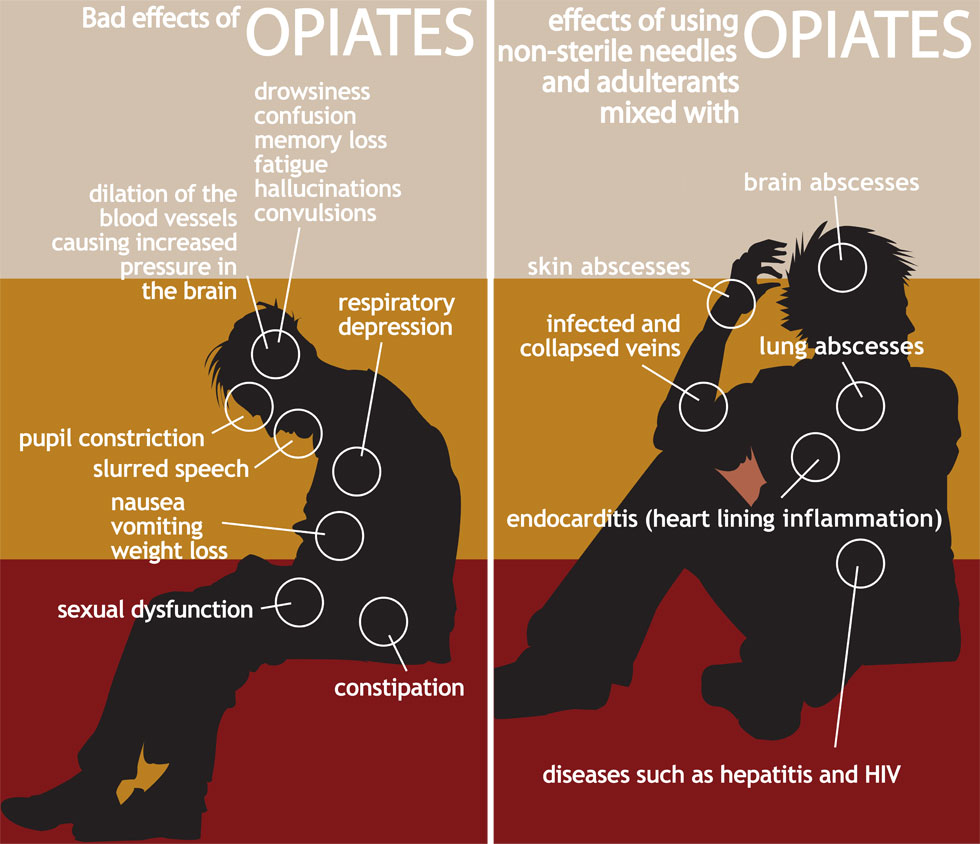
Opium and other opiates have significant short and long-term effects.
Opium’s natural analgesic effects start in the brain and travel throughout the body via the central nervous system. Opium has a similar chemical make-up as the brain’s own natural endorphin or pain-relieving chemicals. When ingested, the brain metabolizes opium in the same way it metabolizes its own endorphin materials.
According to the University of California at Los Angeles, opium long term effects result from brain chemical imbalances that develop as opium overpowers normal brain functions. These combined effects make opium (and its derivatives) one of the most powerful psychoactive drugs in existence.
Physical Dependency
With ongoing opium use, brain chemical processes become physically dependent on the effects of the drug. As one of the more distressing opium long-term effects, someone who’s physically dependent on opium will start to experience withdrawal effects on a regular basis.
Withdrawal effects commonly take the form of:
- Bouts of depression
- Anxiety episodes
- Fatigue
- Gastrointestinal problems (stomach cramps, nausea, diarrhea)
Continued opium use also triggers increasing tolerance levels in the brain. This means the longer a person uses the larger the dose needed to create the same expected effects.
Brain Damage Effects
As the brain’s tolerance levels continue to rise, users eventually reach a point where no amount of opium will produce the desired effects, nor will it relieve withdrawal effects. At this stage, opium long term effects have caused real damage to brain structures and, for the most part, have warped normal brain chemical processes.
Even though brain tolerance levels continue to increase, large dosage amounts can quickly overwhelm other major bodily processes, such as respiratory and cardiac functions. These conditions place users at a high risk of overdose.
Addiction
Of all opium long term effects, addiction exerts the greatest damage of all in a person’s life. The physical toll an opiate addiction takes on a person’s health can lead to the development of other serious medical conditions.
Once addiction takes over a person’s thoughts and behaviors, it becomes difficult to maintain relationships or hold a job for any length of time. Ultimately, users see their lives slowly fall apart as opium’s effects take over.
 Will Opium Addicts Relapse After Treatment? -
According to Harvard Medical School, “Addiction is a chronic disease with no lasting inexpensive cure. Recovery, when it occurs, is precarious, and relapse is a constant danger.” This does not necessarily mean that an individual will definitely relapse after opium addiction treatment, but they will likely experience issues that will trigger them to relapse or ...
Will Opium Addicts Relapse After Treatment? -
According to Harvard Medical School, “Addiction is a chronic disease with no lasting inexpensive cure. Recovery, when it occurs, is precarious, and relapse is a constant danger.” This does not necessarily mean that an individual will definitely relapse after opium addiction treatment, but they will likely experience issues that will trigger them to relapse or ...  Am I a Good Candidate for Naltrexone? -
Naltrexone can be a beneficial treatment option for many recovering opiate addicts, however it is not meant for everyone.
Am I a Good Candidate for Naltrexone? -
Naltrexone can be a beneficial treatment option for many recovering opiate addicts, however it is not meant for everyone.  Opioid Addiction: Why Professional Treatment is a Necessity -
The withdrawal symptoms of opioid drugs are widely known as being the worst to handle and most people who try to do it on their own will yield to the pain. These symptoms require professional help to overcome so that the addict can move closer to becoming sober. Addicts should know why professional treatment is ...
Opioid Addiction: Why Professional Treatment is a Necessity -
The withdrawal symptoms of opioid drugs are widely known as being the worst to handle and most people who try to do it on their own will yield to the pain. These symptoms require professional help to overcome so that the addict can move closer to becoming sober. Addicts should know why professional treatment is ...  Does Methadone Block Opiates? -
Opiate addiction rates have reached epidemic proportions within the past decade and continue to rise with each passing year. News reports of famous celebrities entering rehab, returning to rehab and even meeting tragic ends speak to the devastating effects opiates can have on a person’s life. Opiate addictions also carry an incredibly high potential for ...
Does Methadone Block Opiates? -
Opiate addiction rates have reached epidemic proportions within the past decade and continue to rise with each passing year. News reports of famous celebrities entering rehab, returning to rehab and even meeting tragic ends speak to the devastating effects opiates can have on a person’s life. Opiate addictions also carry an incredibly high potential for ...  Methods Used in Opium Detox -
Opium Abuse Drugs that are made form opium, such as, heroin, morphine, codeine, and prescription painkillers such as OxyContin, Vicodin, Percocet, and Percodan, are commonly abused. Opium based drugs result in millions of people using them illegally every year, leading to millions of people developing addiction and dependencies to them. Heroin is one of the most ...
Methods Used in Opium Detox -
Opium Abuse Drugs that are made form opium, such as, heroin, morphine, codeine, and prescription painkillers such as OxyContin, Vicodin, Percocet, and Percodan, are commonly abused. Opium based drugs result in millions of people using them illegally every year, leading to millions of people developing addiction and dependencies to them. Heroin is one of the most ...