Like all opiate-based drugs, synthetic opioids are addictive. These substances can either be fully synthetic and made completely in a laboratory or semi-synthetic (which means that they are derived from natural opiates like opium, morphine, thebaine, or codeine). The abuse and addiction potentials of opioid drugs are based on many different factors, but synthetic opioids are just as addictive as natural opiate drugs.
How Do Synthetic Opioids Affect the Brain?
According to the NIDA Teen, “Opioids attach to specific proteins, called opioid receptors,” that affect an individual’s pain sensations, emotions, and bodily functions. The way that synthetic opioids affect the brain is pleasurable, especially in high doses that can cause euphoria. The brain will become convinced that the individual needs to repeat this same behavior again and again because of the pleasurable reaction until the individual becomes addicted (NIDA Teen).
What Other Factors Can Help Cause Addiction to Synthetic Opioids?
Because the individual is continuing the behavior, soon they will feel unable to live without it. Everything else will become less important and they will keep abusing these drugs. Still, there are other factors that can make an individual more likely to become addicted to an opioid drug.
- A mental disorder or illness
The NIDA states, “Mental disorders can lead to drug abuse, possibly as a means of ‘self-medication.’ Patients suffering from anxiety or depression may rely on alcohol, tobacco, and other drugs to temporarily alleviate their symptoms.” - Addiction in the family
If a family member is addicted to a certain substance, or you have a history of addiction in your family, you are more likely to become addicted to a substance as well. - A stressful lifestyle
If you are struggling during a stressful time in your life or you have a particularly stressful lifestyle, there is a higher chance that, if you began using a synthetic opioid, you would become addicted to the feelings of relaxation, drowsiness, euphoria, and painlessness they can cause. - Low self esteem
Opioids make people feel good, about themselves and their environments. Struggling with a case of low self esteem can cause someone to be more likely to become addicted to a substance that already makes them feel good.
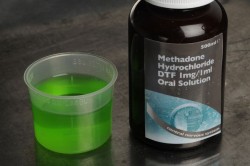
Methadone is an example of an addictive synthetic opioid.
Synthetic opioids on their own can cause addiction to occur in the life on an individual who does not experience any of these factors presently. But these issues can make someone much more likely to become addicted when they are abusing synthetic opioids. These factors could even drive someone who is taking these drugs through a doctor’s care to start abusing them, thus opening themselves up to addiction.
Which Synthetic Opioids are Addictive?
All synthetic opioids have the possibility of causing addiction, just like all natural opiate drugs do. If an individual continues to abuse these drugs over and over, addiction will occur. Still, certain opioids are more addictive or more powerful than others. Those listed below are either particularly addictive or have a high abuse potential which can often make them extremely addictive.
- Fentanyl
Fentanyl is even “more potent than morphine” and can cause addiction in those who abuse it very quickly (NIDA). It is not even advised to be used medically to treat the pain issues of any patients who aren’t already tolerant to the effects of other opioid drugs. - Methadone
Methadone is one of the most highly abused drugs in the United States. This intense synthetic opioid is an “extremely physically addictive drug,” though CESAR states that it is less likely to cause addiction when the individual is using it under the supervision of a doctor. - Heroin
Heroin, unlike fentanyl and methadone, is actually a semi-synthetic opioid, meaning that it is derived from a natural opiate (in this case, morphine). However, heroin is the other most highly abused drug in the United States, and because its acting time is so short, it can cause an individual to abuse it quickly thereafter, again and again. - Oxycodone and Hydrocodone
For quite a while, oxycodone was one of the most commonly abused semi-synthetic opioids. Now hydrocodone is “associated with more drug abuse and diversion” than any other opioid drug (DEA).
If Synthetic Opioids are Addictive, Why are They Manufactured?
There is a high demand for pain medication today, and synthetic opioids allow there to be different types of opioid drugs that are not solely (or in some cases, in any way) based on the necessity of growing and harvesting poppy plants which is where natural opiates come from.
Pharmaceutical companies also often manufacture synthetic opioids in the hopes that they may be able to create a better, less addictive, safer, or faster acting drug. According to the NCBI, when heroin was first being produced in 1898 by The Bayer Company as a licit pharmaceutical, “the first clinical results were so promising that heroin was considered a wonder drug.” Over time, of course, it was proven just how dangerous heroin can be.
How Can I Prevent Synthetic Opioid Addiction?
Many synthetic opioids are licit medications that doctors give to patients so that they can fight pain and (in the case of methadone and buprenorphine) issues of opioid addiction. Still, if a patient strays from their doctor’s prescription, it is easy to become addicted to these drugs. In order to prevent yourself from experiencing any of the issues associated with opioid addiction, follow these steps:
- Always follow your doctor’s prescription. Do not take the drug more often or in higher doses than your doctor prescribed you to take it.
- If you are given a synthetic opioid medication prescription, do not crush the pill, snort it, inject it, or take it in any way other than you are told by your doctor.
- Do not take opioid drugs if you do not have a prescription to take them, especially with other depressants such as alcohol.
- Do not stop taking any opioid drugs in the middle of your treatment regimen. If you are having an issue with the way they are affecting you, discuss it with your doctor before going off the medication entirely.
Synthetic opioid drugs are addictive, just as any type of opioid drug can be. It is important to avoid the possibility of addiction by not abusing these drugs.
 How to Avoid Using Opiates for the Holiday Blues -
Most people believe the holidays to be a time of joy and happiness, but to some they only contain stress, depression, and loneliness. According to the popular news website CNN, the majority of the people who suffer from the holiday blues do so because of the emphasis on family and happiness when they are not ...
How to Avoid Using Opiates for the Holiday Blues -
Most people believe the holidays to be a time of joy and happiness, but to some they only contain stress, depression, and loneliness. According to the popular news website CNN, the majority of the people who suffer from the holiday blues do so because of the emphasis on family and happiness when they are not ...  10 Issues with Chronic Pain that You Should Know About -
Approximately 115 million people suffer from some form of chronic pain, according to the National Institute on Drug Abuse. As the elderly population and returning veteran population increases this number grows daily. Unfortunately, there are not many ways to treat chronic pain. If you suffer from chronic pain there are a few things you should ...
10 Issues with Chronic Pain that You Should Know About -
Approximately 115 million people suffer from some form of chronic pain, according to the National Institute on Drug Abuse. As the elderly population and returning veteran population increases this number grows daily. Unfortunately, there are not many ways to treat chronic pain. If you suffer from chronic pain there are a few things you should ...  Holistic Methods of Opium Treatment for Addiction -
Opium or opium-based drugs have taken on a reputation as some of the most addictive drugs on the market. While opium itself comes directly from the opium poppy seed plant, opium-based drugs take on a variety of forms, from Dilaudid to Demerol to morphine and even heroin. Not surprisingly, effective methods of opium treatment for ...
Holistic Methods of Opium Treatment for Addiction -
Opium or opium-based drugs have taken on a reputation as some of the most addictive drugs on the market. While opium itself comes directly from the opium poppy seed plant, opium-based drugs take on a variety of forms, from Dilaudid to Demerol to morphine and even heroin. Not surprisingly, effective methods of opium treatment for ...  Types of Opiate Withdrawal Treatment Medications Used in Inpatient Rehab -
According to the National Library of Medicine, “Treatment” for opiate withdrawal “involves supportive care and medications.” When a given patient attends inpatient rehab for opioid withdrawal, a number of different pharmacological therapies may be used, especially because certain opiate withdrawal treatment medications are more beneficial to some patients than others. These medications, while providing similar ...
Types of Opiate Withdrawal Treatment Medications Used in Inpatient Rehab -
According to the National Library of Medicine, “Treatment” for opiate withdrawal “involves supportive care and medications.” When a given patient attends inpatient rehab for opioid withdrawal, a number of different pharmacological therapies may be used, especially because certain opiate withdrawal treatment medications are more beneficial to some patients than others. These medications, while providing similar ...  What Are Natural Opiates? -
There are actually three kinds of opioid drugs. There are synthetic opioids, semi-synthetic opioids, and natural opiates. Natural opioids are called this because they come from a natural source. According to ISATE, they “are derived from the… opium poppy.” While some opioid drugs are completely manmade and manufactured in a lab, natural opiates come directly ...
What Are Natural Opiates? -
There are actually three kinds of opioid drugs. There are synthetic opioids, semi-synthetic opioids, and natural opiates. Natural opioids are called this because they come from a natural source. According to ISATE, they “are derived from the… opium poppy.” While some opioid drugs are completely manmade and manufactured in a lab, natural opiates come directly ...