Opium is the latex juice emitted from a certain poppy species known as Papaver somniferum. The poppy pod is scratched or “scored” to emit the opium which is then collected and dried. Around the world, ancient use of unprocessed opium has been documented as the most potent pain relief medicine prior to the American Civil War.
In 1857, the hypodermic needle was invented and morphine was introduced as a liquid medicine that could be injected, in precise dosages, as needed. Morphine grew in popularity and replaced the use of unprocessed opium in common medicine practices.
Is Morphine Opium? Distinguishing the Difference
Opium is not the same as opiates which are the major psychoactive alkaloids extracted from the opium. According to the United Nations Office on Drugs and Crime, “The six opium alkaloids which occur naturally in the largest amounts are morphine, narcotine, codeine, thebaine, papaverine and narceine. Of these, three are phenanthrene alkaloids and are under international control: these are morphine, codeine, and thebaine. They are all three used in the drug industry, thebaine usually for conversion into some derivative which is more useful medically. Of the other three, not under international control, narcotine and narceine have scarcely any medical or other uses. Consequently, the four economically significant alkaloids of opium are morphine, codeine, thebaine and papaverine.opiates”.
Morphine
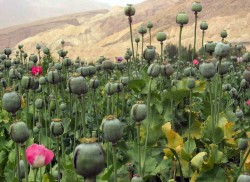
Morphine is a processed form of opium.
Morphine is the main alkaloid of opium and found in the highest content. It is also holds the highest medical importance as one of the most effective drugs known for the relief of severe pain. Morphine content of opium, as a percentage, varies by the moisture content. It also depends on how many times the poppy pod has been bled.
Normally, the morphine content of opium is between 8 and 19 percent after being air dried. Some cultivators have reached a percentage of up to 26 percent. Cultivators who score the poppy pod only once will typically yield the highest percentage of morphine content. Some cultivators will score the pod 4-5 times until the latex stops running and with each score, the quantity of opium and the content of morphine is lessened.
Morphine is frequently processed into heroin which is illegal and has no acceptable medical use. Morphine is classified as a Schedule II narcotic under the Controlled Substances Act. A small percentage of the morphine extracted from opium is used directly for pharmaceutical products while the remaining morphine is processed into codeine and other derivatives.
 Addiction Denial vs the Need for Opiate Addiction Treatment -
By the time opiate addiction takes hold, the effects of the drug do a number on a person’s psychological makeup and overall well-being. As of the first drug dose, opiate effects work to perpetuate continued drug use. Consequently, the longer a person abuses opiates the harder it becomes to stop using. Addiction denial develops out ...
Addiction Denial vs the Need for Opiate Addiction Treatment -
By the time opiate addiction takes hold, the effects of the drug do a number on a person’s psychological makeup and overall well-being. As of the first drug dose, opiate effects work to perpetuate continued drug use. Consequently, the longer a person abuses opiates the harder it becomes to stop using. Addiction denial develops out ...  Overdose Deaths after Heroin Treatment -
According to the Centers for Disease control, heroin overdose has now reached epidemic proportions. What is even more surprising is that many of these overdose deaths are after the person receives treatment for heroin addiction. It seems strange that so many people who sought treatment still overdose on this powerful drug. There are a few reasons ...
Overdose Deaths after Heroin Treatment -
According to the Centers for Disease control, heroin overdose has now reached epidemic proportions. What is even more surprising is that many of these overdose deaths are after the person receives treatment for heroin addiction. It seems strange that so many people who sought treatment still overdose on this powerful drug. There are a few reasons ...  Who Experiences Opium Withdrawal? -
Opium withdrawal is a condition experienced by people who become dependent on opium. Dependence occurs when a person either uses or abuses a drug for a specific amount of time, usually at least a few months. When people become dependent on opium, they feel as if they cannot function normally without it. Opium withdrawal then ...
Who Experiences Opium Withdrawal? -
Opium withdrawal is a condition experienced by people who become dependent on opium. Dependence occurs when a person either uses or abuses a drug for a specific amount of time, usually at least a few months. When people become dependent on opium, they feel as if they cannot function normally without it. Opium withdrawal then ...  Opium Addiction Treatment -
Opium is a substance that is derived from the poppy plant and which causes a euphoric state when smoked or eaten. The drug is considered a narcotic and was widely abused throughout Chinese culture for hundreds of years before the dangers of addiction were first noticed. Opium addiction has led to life-threatening consequences, dangerous illness and a world ...
Opium Addiction Treatment -
Opium is a substance that is derived from the poppy plant and which causes a euphoric state when smoked or eaten. The drug is considered a narcotic and was widely abused throughout Chinese culture for hundreds of years before the dangers of addiction were first noticed. Opium addiction has led to life-threatening consequences, dangerous illness and a world ...